
Seeing your child worry is hard, and knowing how to help a child with anxiety can feel unclear. Start with calm listening, steady routines and small steps, and see a GP if worry blocks daily life.
This guide sits in the digital parenting section of the site, which also looks at how screens and media shape family life.
| Item | Value |
|---|---|
| Age range when separation anxiety is very common | Around 6 months to 3 years |
| When separation anxiety should fade | Around age 2 to 3 |
| Suggested daily one-on-one time without media | 10 minutes each day |
| Suggested daily activity | At least an hour every day |
| Sleep for school-aged children | 9 to 12 hours every night |
| Sleep for teens | 8 to 10 hours every night |
These figures come from the NHS and HealthyChildren.org. Guidance can change, so check the source before you rely on them.
What counts as normal worry, and when is it a problem?
Worry is part of growing up. The NHS says separation anxiety is very common from around 6 months to 3 years, and that this normal stage should stop at around age 2 to 3.
Young children often pick up specific fears, such as animals, insects, storms, heights, water, blood and the dark. According to the same NHS page, these fears usually go away gradually on their own.
Anxiety becomes a problem when it starts to get in the way of everyday life. The NHS describes two warning patterns:
- The anxiety is very strong, or getting worse, and does not go away.
- It stops your child doing things they enjoy.
The NHS gives a clear picture of the difference: at exam time every child in a school is anxious, but some are so anxious that they do not manage to get there that morning.
Signs of anxiety in children
Younger children cannot always explain what they feel. The NHS lists signs such as being irritable, tearful or clingy, trouble sleeping, waking in the night, bed-wetting and bad dreams.
In older children, look for a change in behaviour rather than a single sign:
- Trouble concentrating, sleeping or eating.
- Angry outbursts.
- Lots of negative thoughts, or a constant sense that something bad will happen.
- Avoiding everyday activities, such as seeing friends, going out in public or going to school.
The body often speaks first. HealthyChildren.org notes that a child may feel bad or sick without knowing why, or seem restless or tired.
Some anxious children are quiet and eager to please, so their worries are easy to overlook. The American Academy of Child and Adolescent Psychiatry warns that these children’s fears may be missed.
Older children are a special case. The NHS says teenagers are more likely to have social anxiety than other age groups, and the guide on how to talk to teenagers can help you open those conversations.
Everyday ways to help at home
The NHS puts talking first: listen carefully, avoid assumptions, and do not dismiss the worry. For an older child, it suggests describing anxiety as a wave that builds up and then goes away again.
These steps give you a practical routine to try:
- Ask what makes your child anxious. It may be certain times or situations.
- Make a plan together. For a sleepover, that could involve a close friend or another parent being there.
- Keep regular daily routines where you can, since children of all ages find them reassuring.
- Practise relaxing together, for example by taking 3 deep, slow breaths, breathing in for a count of 3 and out for 3.
- Try a worry box: your child writes or draws worries, and you sort through the box together at the end of the day or week.
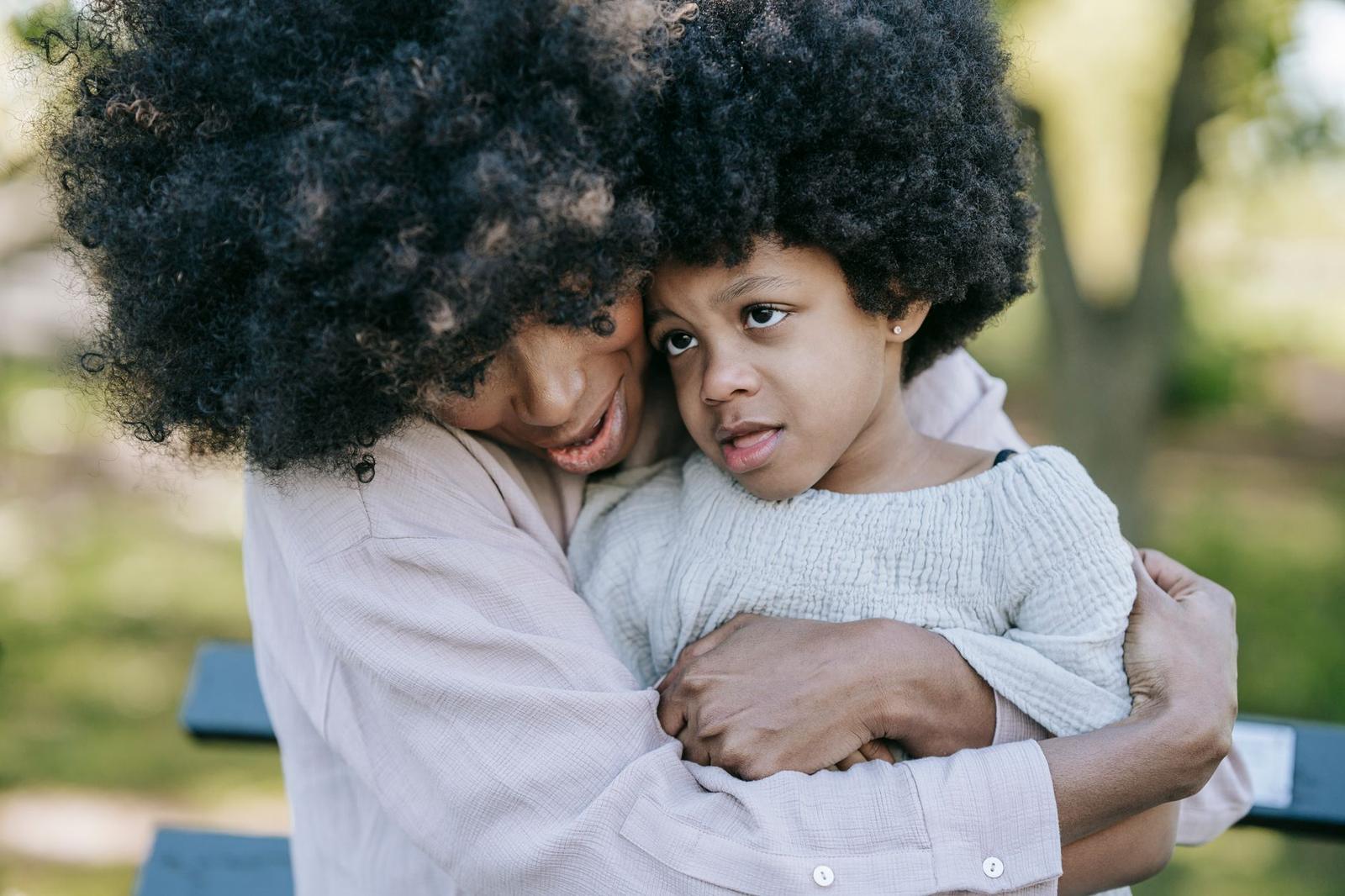
Time together counts too. HealthyChildren.org suggests one-on-one time every day without TV or other media, and says even 10 minutes each day can make a big difference.
The same page links mood to habits. It recommends at least an hour of activity every day, and says school-aged children need 9 to 12 hours of sleep every night while teens need 8 to 10 hours.
It also advises building a family media plan and avoiding scary or violent TV shows, video games and movies. A separate HealthyChildren.org page adds two things to avoid: ridiculing a fear, and pressuring a child to be brave.
Helping with school, change and family stress
School worries respond well to teamwork. The NHS suggests ideas such as a peer mentor, or coming in early to help tidy the classroom and avoid a noisy playground.
Most schools offer quiet or safe spaces for anxious pupils. The NHS also suggests asking for a meeting with your child’s teacher or SENCO, the special education needs co-ordinator.
Big changes can unsettle children, so prepare them ahead of time. The NHS advises preparing your child before the move from primary to secondary school and giving extra support once secondary begins.
Avoid forcing a child into a stressful situation before you have talked about what is making them anxious, because the NHS warns this could make the problem worse. Instead, HealthyChildren.org suggests gradually facing fears, with the goal of coping rather than avoiding.
Tension at home can feed worry as well. If constant bickering is part of the picture, the guide on how to deal with sibling rivalry may help you lower the temperature.
When to seek professional help
The NHS says to seek help if your child is constantly anxious and it is not getting better, self-help is not working, or it is affecting school, family life or friendships. A visit to a GP is a good place to start.
You can speak to the GP alone or with your child, and your child might be able to have an appointment without you. If an anxiety disorder is suspected, the GP may refer your child to local children and young people’s mental health services (CYPMHS). A child who does not want to see a doctor may be able to use a local youth counselling service.
Treatment depends on age and cause. Options named by the NHS include:
- Counselling, to help your child understand what is making them anxious.
- Cognitive behavioural therapy (CBT), a talking therapy that changes the way a child thinks and behaves.
- Anxiety medicines, offered if anxiety is severe or does not improve with talking therapies.
For fears that harden into phobias, HealthyChildren.org says behaviour therapy is the first line of treatment. It describes a gradual process called desensitization, where a child meets the feared thing in small, safe doses.
Families sometimes ask whether risk can be predicted. The NHS says a close family member with anxiety may raise a child’s chance of having it, and that children with ADHD or autistic spectrum disorders are more likely to have anxiety problems.
If you want to talk to someone yourself, the NHS lists the YoungMinds Parents Helpline on 0808 802 5544, Monday to Friday 9.30am to 4pm. That is as of the NHS page last reviewed 15 December 2023, so confirm the details before you call.
Frequently asked questions
Is it normal for my child to feel nervous before tests or a new school?
Show answer
Yes. The NHS says many children feel anxious about a new school or exams, and many of these worries are a normal part of growing up. The concern is anxiety that stays strong and stops them taking part in life.
Should I push my child to face the thing they fear?
Show answer
Not by force. HealthyChildren.org says it takes time for a child to confront and move beyond their anxieties, so small, supported exposure works better than pressure to be brave.
Can my child see a doctor on their own?
Show answer
Possibly. According to the NHS, your child might be able to have a GP appointment without you, and you can also speak to the GP separately.
What does CBT involve?
Show answer
The NHS describes cognitive behavioural therapy as a talking therapy that helps a child manage anxiety by changing how they think and behave. It can be delivered in person or as self-help online.
Does a parent have a role in treatment?
Show answer
Yes. The American Academy of Child and Adolescent Psychiatry says caregiver involvement is essential for preschool and school-age children.